Back the Way It Came: Tracing a Card Refund Through a Bristol Till
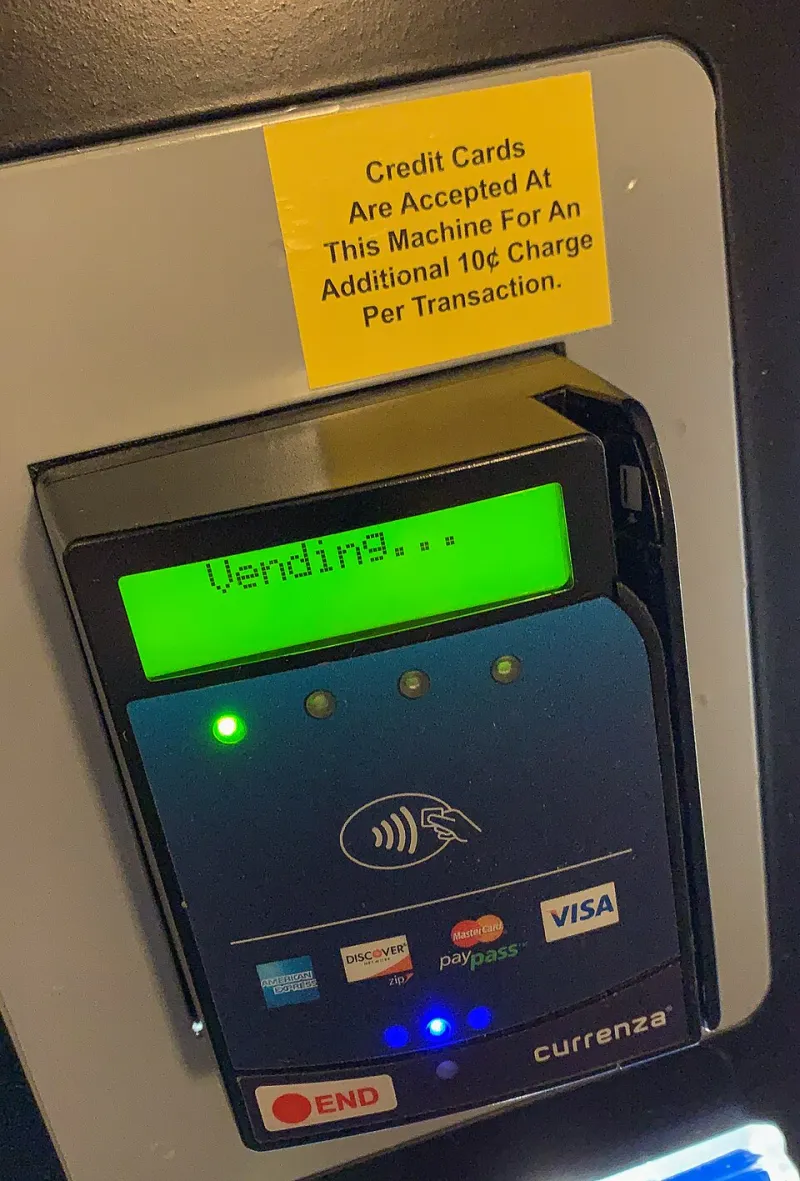
Photo: Tony Webster from Minneapolis, Minnesota, United States, CC BY 2.0, via Wikimedia Commons
A refund at the counter feels like undoing a sale. In practice, it is closer to making a second, smaller payment in the opposite direction. The customer sees one line on a statement; behind the till, the money takes a different route through your terminal, your acquirer and the card schemes before it reaches the issuing bank. Understanding that route helps Bristol independents set realistic expectations, word their policies clearly and keep their daily reconciliation tidy.
The route a refund takes
When you process a refund, your terminal does not reach back and cancel the original transaction. It creates a new transaction instructing your acquirer to return funds to the card that was used. The acquirer passes that instruction through the relevant card scheme to the customer's issuing bank, which then posts the credit to the account.
The original sale and the refund are therefore linked by reference but not identical in timing. The sale may already have settled days ago. The refund begins its own settlement cycle from the moment you process it. That is why a customer who paid on Monday and received a refund on Friday may see the credit appear later than they expect, even though the original payment left their account quickly.
Why refunds can lag purchases
Card payments are authorised first and settled later. A purchase often shows as a pending authorisation almost immediately, which makes it feel instantaneous. A refund has no equivalent pending stage in most customer banking apps. It appears when the issuing bank posts it.
Several ordinary factors add delay. If you process a refund after your terminal's daily cut-off, it joins the next batch. Weekends and bank holidays stretch the chain. Some issuing banks take longer to display credits than debits. None of this necessarily indicates a fault. It indicates that the refund is travelling through a settlement system designed primarily for purchases.
For Bristol shops near the Christmas season, this matters. A customer returning a gift in early December may be watching for the credit before a planned purchase. A calm explanation of the route is more useful than a promise of same-day arrival.
Partial refunds and repeated returns
Partial refunds are common in independent retail: a customer keeps one item and returns another, or a service is adjusted. Each partial refund should be processed against the original transaction reference where your terminal allows it. Do not refund more than the original amount across multiple partial refunds; the terminal or acquirer may reject it, and the reconciliation becomes difficult to untangle.
Some terminals require the original card to be present for a refund. Others allow a manual refund to a card number, which carries greater risk and should be restricted to managers. For online or telephone orders, the refund should go back to the original payment method unless your published policy says otherwise.
Where processing fees sit
A refund does not usually return the processing fee charged on the original sale. That fee covered the cost of accepting the payment, and the acquirer has already carried it. Some contracts also charge a separate refund fee or a small per-refund administrative cost. Others do not. The difference should be visible in your terms, not discovered at month-end.
This is a commercial point, not a customer-facing one. The customer is entitled to the purchase price back according to your returns policy. Your processing costs are a cost of doing business and should be built into your pricing, not deducted from the refund unless your policy explicitly says so and the customer agreed at the point of sale.
Counter language that sets the right expectation
Staff should be able to explain the route without overpromising. Useful wording includes:
- 'I have processed the refund now. It goes back to the card you paid with, usually within three to five working days, though your bank controls the exact timing.'
- 'The refund is separate from the original payment, so it may not appear in the same place on your statement.'
- 'I can give you a refund receipt with the reference and amount so you can follow it up if needed.'
Avoid saying 'it will be in your account tomorrow' unless your acquirer has confirmed that timetable for that card type. Avoid suggesting the customer can collect cash instead if the original payment was by card; that creates a cash-handling and reconciliation problem.
Policy wording for receipts and the website
A short, plain paragraph is enough: 'Refunds are made to the original payment method. Card refunds are processed on the day of return and typically appear within three to five working days, depending on your bank. Processing times are outside our control. Please keep your refund receipt as proof of the transaction.'
That wording is neutral, accurate and gives staff a script they can point to. It also avoids promising a speed the payment system cannot guarantee.
A refund log that keeps reconciliation clean
Every refund should leave a trace that matches your terminal batch. A simple log, kept at the till or in a shared spreadsheet, should record:
- Date and time of refund.
- Original transaction reference and the refund reference.
- Amount refunded and whether it was full or partial.
- Card type and last four digits.
- Staff initials and reason for the refund.
- Whether a refund receipt was given.
- For partial refunds, the remaining balance on the original sale.
At the end of the day, compare the refund total in the terminal batch report with the log. Refunds usually appear as negative amounts in the batch. Do not net them against sales without recording them separately; your accountant and your reconciliation both need the gross figures.
A final check for Bristol shopkeepers
Refunds are a normal part of independent retail, not an exception. The businesses that handle them well are the ones that treat the refund as its own transaction: explained clearly at the counter, logged consistently and reconciled alongside the day's sales. The money will find its way back. Your job is to make sure the paper trail, the counter language and the customer's expectations all travel with it.