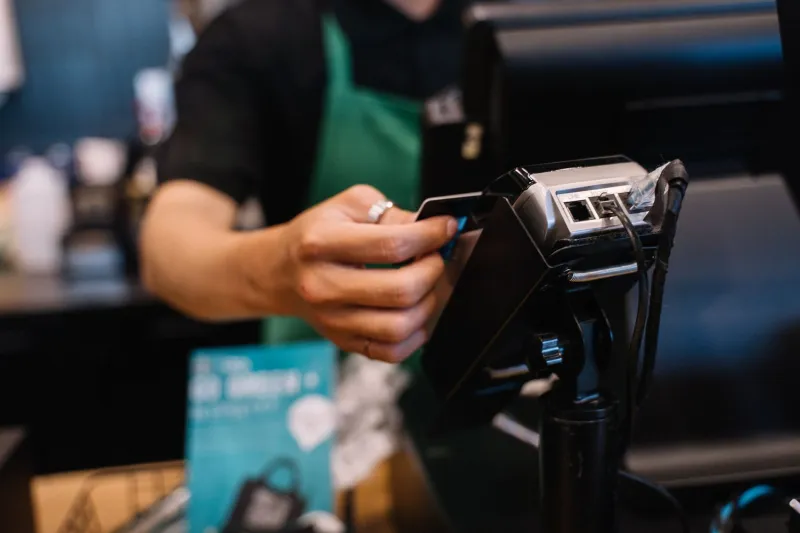
One Price at the Till: Absorbing Card Costs in a Bristol Shop
At counters from St Nicholas Market to Gloucester Road, the same question tends to resurface whenever margins tighten: can we simply add a small percentage when a customer pays by card? For consumer card payments in the UK, the answer is no. The prohibition is not new, but it is still misunderstood, and the misunderstandings tend to cluster around the same handful of phrases: “it is only 1.5 per cent”, “we will call it an administration charge”, or “the terminal company is the one charging us”. None of these changes the legal position.
What the ban actually covers
The Consumer Rights (Payment Surcharges) Regulations 2012 originally limited surcharges to the actual cost of processing a payment. Since 13 January 2018, the position for consumer card payments has been simpler: no surcharge at all. That applies to debit cards, credit cards, contactless payments, mobile wallets such as Apple Pay and Google Pay, and online card payments. It also covers American Express and other card schemes when the card is held by a consumer.
A surcharge is any additional charge imposed for using a particular payment method. The label attached to it is irrelevant. If a Bristol retailer displays a price of £10 and then charges £10.20 because the customer paid by card, the 20p is a surcharge. Calling it a service fee, a processing fee, an administration fee or a card-handling charge does not alter its character. Nor does applying it only to credit cards, only to American Express, or only to payments above a certain value. If the card is a consumer card, the extra charge is prohibited.
Where Bristol tills still go wrong
The most common error is treating the merchant service charge as something that can be passed through as a visible line item. That is precisely what the regulations prevent. A second error is assuming that the ban applies only to large businesses or only to online transactions. It applies to any trader accepting consumer card payments, including a single-site independent in Bedminster or a service business operating from a studio in the Harbourside.
A third error concerns minimum spend policies. A minimum card spend is not, strictly speaking, a surcharge: it does not add a percentage to the bill. However, it is a separate commercial lever with its own considerations. Card scheme rules and acquirer terms may restrict or require clear disclosure of minimum transaction amounts, and a policy that effectively penalises card use can create customer friction. It should not be confused with a compliant pricing strategy, and it should be reviewed carefully before being introduced.
Why “passing on the fee” is not simple arithmetic
The merchant service charge is not a single, uniform percentage. It varies by card type, by whether the card is consumer or commercial, by turnover, by terminal type and by the terms negotiated with the acquirer. A flat 1.5 per cent added at the till would overcharge some customers and undercharge others. It would also create a visible discrepancy between the headline price and the amount taken, which is exactly the kind of discrepancy the regulations were designed to eliminate.
There is a commercial argument as well as a legal one. A card fee line on a receipt is evidence. It invites customer complaints, creates awkward conversations for staff, and can attract the attention of Trading Standards. The reputational cost for an independent business that depends on local loyalty is rarely worth the modest sum recovered. The safer and more professional route is to treat card processing as a cost of doing business, in the same way as rent, insurance or utilities, and to recover it through the headline price.
The business-card boundary
Commercial cards occupy a different legal space from consumer cards, and some businesses discuss surcharging corporate cards as a way to manage costs. For most Bristol independents, this is not a practical route. Staff at the counter cannot reliably distinguish a corporate card from a personal card, and a policy that appears to apply differently to different customers is difficult to administer and easy to misapply. The prudent approach is to treat every card payment as subject to the consumer rules unless there is a clear, documented commercial-card agreement in place. A simple, single-price policy is easier to train, easier to explain and far less likely to go wrong.
Compliant ways to protect margin
The first and most straightforward option is a single headline price that covers all payment methods. This does not mean absorbing costs passively. It means reviewing prices annually, or when processing costs change, and adjusting the headline price across the board. A modest increase applied evenly is usually less noticeable than a separate card fee, and it preserves the simplicity of the customer experience.
The second option is procurement. Acquirer pricing is negotiable, particularly for businesses with steady card turnover. Comparing statements, checking for hidden charges and revisiting the contract at renewal can reduce the effective rate without any change at the till. The third option is to reduce the cost per transaction by reviewing terminal choice and payment mix. For invoice-based service businesses, offering bank transfer as an alternative for larger bills is a commercial choice, not a surcharge, provided the card price is not inflated to penalise card use.
A genuine cash discount is sometimes suggested as a workaround. It may be defensible in limited circumstances if the standard price is the same for all customers and the discount is genuinely optional and clearly signposted, but it requires care and should not be used as a disguised card surcharge. For most independents, the cleaner approach is a single price and a clear explanation that card costs are included.
A counter script that works
Staff need a short, consistent answer when customers ask why there is no card fee. Something like: “Our prices are the same however you pay.” If pressed, the explanation can be equally brief: “Card costs are built into our prices.” This avoids debate, reinforces fairness and keeps the transaction moving. It also aligns with the legal position, which is that the price displayed should be the price paid, regardless of the payment method.
The surcharge ban is settled law, and the commercial logic points in the same direction. Bristol businesses protect margin through pricing discipline and procurement, not through a percentage added at the point of payment. A single, transparent price remains the most defensible and the most professional option.