No Notes at the Counter: Weighing a Cash-Free Till for Your Bristol Business
Photo: Roger Cornfoot , CC BY-SA 2.0, via Wikimedia Commons
Walk down Gloucester Road or through St Nicholas Market on a Saturday and you will pass a dozen variations on the same notice: card and contactless only. Some are printed neatly on acrylic, others are handwritten on the back of a receipt. Few of them explain themselves, and fewer still were arrived at after anything resembling a calculation. That is the gap this article tries to close.
Going cash-free is a commercial decision, not a moral one. It can be right for a barber with a booking system and wrong for a takeaway three doors from a cash point. The point is to make the choice deliberately, price it properly, and then communicate it in a way that regulars read as policy rather than rejection.
What the sign on the door is actually saying
A customer standing at your counter reads the notice in about two seconds, and in those two seconds decides whether it applies to them or is aimed at them. The difference is almost entirely in the wording. ‘No cash’ sounds like a prohibition. ‘Card and contactless payments only — nearest cash point 90 metres’ reads like a policy with a courtesy attached.
Before designing the sign, though, it is worth knowing what you are actually giving up and what you are actually saving. The first is easy to measure. The second usually is not, because most of the cost of handling cash never appears on an invoice.
The hidden payroll of a cash till
Start with the float. A working till typically needs £150 to £300 in change, drawn from your bank account and therefore from your working capital. Someone counts it in the morning, someone counts it at close, and on a good day the two figures agree. A modest independent doing six days a week will spend somewhere between fifteen and thirty minutes a day on cashing up, over and above the time spent banking.
That time has a price even if it is the owner’s own evening. Twenty minutes a day at six days a week is roughly 100 hours a year. Pay yourself £12 an hour and you have spent £1,200 before you have paid a single banking charge.
Then the charges themselves. Business banking for cash is rarely free: expect a deposit fee charged per £100 lodged, plus a separate charge if you use a collection service rather than carrying it to a branch. Coin handling is often charged differently from notes. A shop banking £1,500 a week in cash can easily find that the combined cost of depositing, collecting and insuring it lands somewhere between 1% and 2.5% of the amount banked — comparable to, and sometimes worse than, the card fees the same trader is trying to avoid.
Add the risk line. Insurance policies commonly cap cash kept on the premises, often at £500 or £1,000, and a break-in above that limit is your loss. Add counting errors, the occasional counterfeit note, and the awkward conversation when the till is £10 light at close. None of these is fatal; together they are a running cost that rarely gets written down.
The card ledger, honestly
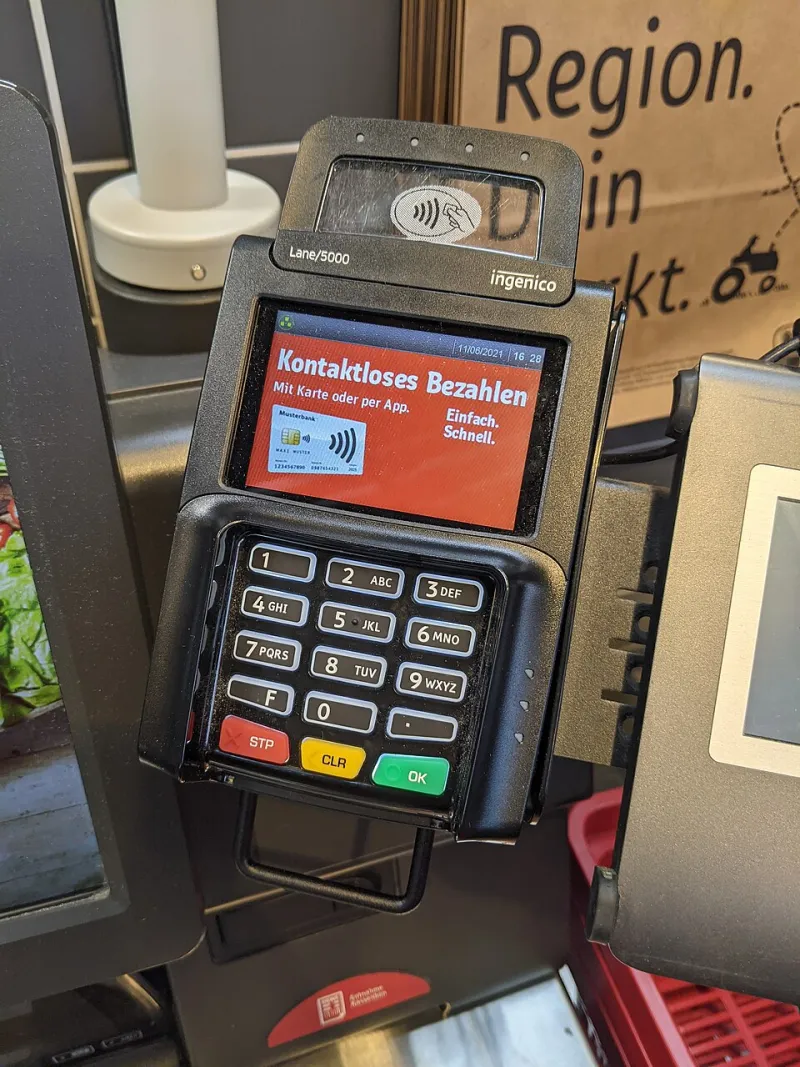
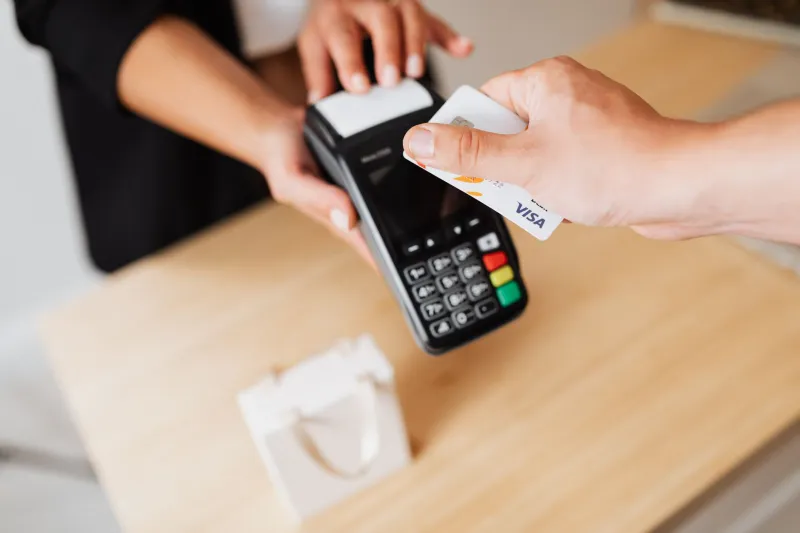
Card acceptance is not free either, and the pricing is deliberately opaque. A typical small Bristol business pays a percentage on debit transactions in the region of 0.3% to 1%, and on credit cards somewhere between 1.3% and 2%. On top of that sits a terminal rental or service fee, commonly £10 to £25 a month, sometimes a PCI compliance charge, and frequently a minimum monthly service charge of £15 to £25 which bites hardest in quiet January.
On a £3.20 coffee, a 0.8% debit fee is under three pence. That is not the figure that hurts. The figure that hurts is a flat monthly minimum charged in a month when takings collapse.
Set against that, card payments settle into your account within one or two working days with no counting, no float and no trip to the bank. The reconciliation burden shifts from physical to digital, which is not zero but is smaller and can be done in batches rather than daily.
Four Bristol businesses, four different answers
The neighbourhood café. Mixed-age custom, high transaction count, low average ticket. Full cash-free is workable but rarely worth the friction; the sensible middle is a card-preferred counter with a small float, weekly rather than daily banking, and clear signage. The savings come from reduced float and trips, not from refusal.
The barber. Appointment-led, largely card already, and the till often doubles as the booking screen. This is the strongest candidate for going fully cash-free. The main risk is the loyal customer in his seventies who has paid in notes for eleven years; handle him individually rather than through a sign.
The market stall. Connectivity and battery, not cost, decide this one. A stall in St Nick’s with a SIM-based reader and a power bank can trade card-only, but a single network outage on a busy Saturday will cost more than a year of banking fees. Keep a cash tin as a fallback.
The takeaway. Often already effectively card-only through delivery platforms, and cash-free removes the cash-handling risk carried by drivers. The trade-off is the walk-in customer with a £20 note. If your catchment is student-heavy, that customer is rare; if it is suburban family trade, they are not.
A five-question framework before you commit
First, count your cash transactions for two full weeks rather than guessing — split them by day of week. Second, price your cash honestly: deposit fees, collection charges, any insurance premium difference, plus the hours spent counting at your own rate. Third, price your card acceptance the same way, including the monthly minimum. Fourth, compare the two as a percentage of turnover, not as a feeling. Fifth, ask what it costs if you lose one regular a week — because that is the number that never appears in the spreadsheet.
For most Bristol independents with cash at 10% to 20% of transactions, the honest answer is that the saving from refusing cash is modest and the goodwill cost is not. The saving becomes decisive only when cash drops below roughly one transaction in twenty and the float, banking and insurance faff remain constant.
Getting the notice right
If you decide to go card-free, write the sign as a policy with a reason and an alternative. Say what you accept, not what you refuse, and point to the nearest cash point. Brief staff on a one-line script so the answer is consistent at every till. Consider the customer who genuinely operates in cash — and remember that while there is no legal obligation to accept notes and coins for a card-sized transaction, a blanket refusal in an area with patchy connectivity or an older population is a reputational decision as much as a financial one.
Bristol once had its own currency, and the city survived its retirement. It will survive the retirement of the till float too. The businesses that get this right will be the ones who did the sums first, decided second, and put a courteous sentence on the door third.