What the Glass Promises: Auditing Card-Acceptance Signage in a Bristol Shop
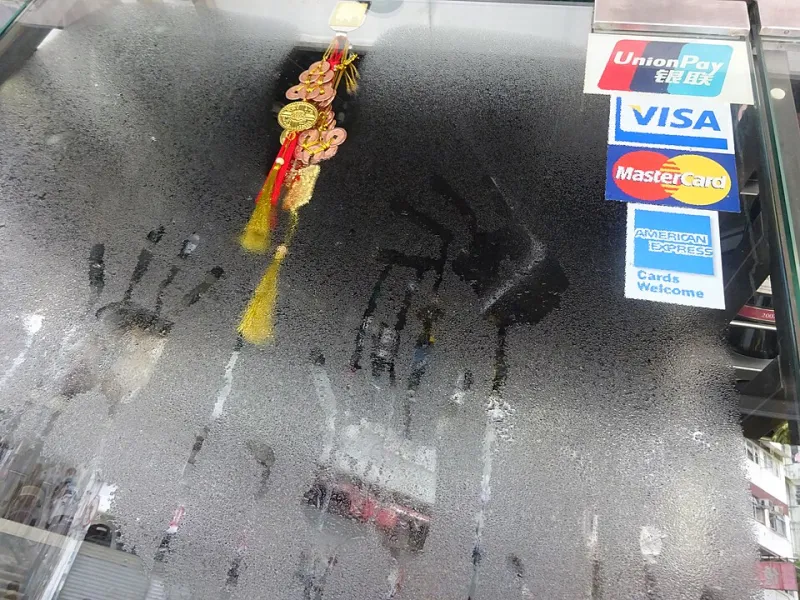
Photo: Shasee Pearashmai, CC BY-SA 4.0, via Wikimedia Commons
A customer approaching a Bristol independent on Gloucester Road or in St Nicholas Market often makes a payment decision before speaking to staff. They look for the contactless symbol, a familiar scheme mark, or a plain statement that cards are welcome. If the glass is cluttered with old logos, the message becomes ambiguous. Signage is not decoration; it is the first line of payment communication.
The first transaction happens before the till
For a busy shop, the value of clear signage is easy to overlook. A customer who is unsure whether a card is accepted may join the queue and ask, or may walk on to a competitor. In either case, uncertainty has a commercial cost. Bristol's high streets serve a mixed audience: local residents, students, office workers and visitors. Some carry only a phone wallet, some rely on a debit card, and some still carry cash. The door sign should let each of them understand the position quickly, without needing to interrogate staff.
This is particularly relevant for independents that have changed payment provider or terminal in recent months. The terminal may be new, but the window can still advertise the old arrangement. That gap between what is displayed and what is actually accepted is the subject of this audit.
What belongs on the glass
A useful rule is to display only what the terminal and merchant account actually accept. That means current scheme marks for Visa and Mastercard, and American Express only if it is genuinely enabled. If contactless is available, the contactless symbol should be shown. If mobile wallets such as Apple Pay and Google Pay are accepted, state this in words or with recognised marks. If the business is card-only, say so at the door and at the counter. If a minimum spend applies, state the amount clearly before the customer reaches the till.
Avoid vague claims such as 'all cards accepted' unless they are accurate. A single tidy panel is more effective than six overlapping stickers. Place the panel at eye level, use strong contrast, and avoid small print that cannot be read from a wheelchair or in poor light. In Bristol's period buildings, condensation and glare can make window signage illegible, so check it at different times of day. For shops with a street-facing stall or a recessed entrance, the same principle applies: the customer should be able to confirm acceptance before committing to the queue.
The counter notice and the quiet contradictions
Counter notices should agree with the door. A handwritten note taped to a till can contradict a printed window sticker, and staff may then have to explain the difference at the moment of payment. If a card minimum is in place, the notice should be permanent and legible, not a scrap of paper produced only when a small transaction arises. If staff sometimes accept American Express despite a 'no Amex' sticker, the policy is unclear and the signage is doing more harm than good. Decide the policy, then display it consistently.
Tipping prompts and charitable donation notices can also sit near the till. Keep them separate from acceptance marks so that the customer is not asked to interpret a cluster of logos and messages at once. The counter should confirm the door, not complicate it.
The cost of an outdated mark
Outdated marks are not neutral. A customer who sees an American Express logo and then has the card refused may abandon the sale or pay another way grudgingly. A visitor who sees a mobile wallet mark but cannot use it may question the shop's reliability. Old acquirer decals left after a provider change add visual noise and can imply an arrangement that no longer exists. The fix is cheap: audit, remove, replace. The loss from a single abandoned premium sale can exceed the cost of new signage.
There is also a staff cost. When signage is wrong, counter staff absorb the confusion. They must explain, apologise or negotiate. Clear marks reduce those conversations and allow the till to move faster. For a Bristol independent with a small team, that is a practical gain, not a cosmetic one.
A short audit for a Bristol shop
A useful audit can be completed in under an hour. Walk from the pavement towards the till and note every acceptance mark on the way.
- List every card-acceptance mark on the door, window, till, website and market stall.
- Check each mark against the live terminal and merchant account.
- Remove marks for networks or wallets that are no longer accepted, and remove old provider decals.
- Ensure card-only, minimum-spend and tipping notices are current and legible.
- Check readability: size, contrast, mounting height, glare and accessibility.
- Align online menus, booking pages and printed materials with the door sign.
- Record the audit date and assign an owner; review quarterly, after any provider change, and before seasonal trade.
Signage as a commercial control
The aim is not more stickers but fewer surprises. Clear acceptance marks reduce failed payments at the counter, shorten queues and help staff answer fewer routine questions. For Bristol independents, the door sign is a small piece of commercial infrastructure. Keep it honest, current and legible, and it will do its job quietly.