Card Minimums at the Counter: Does 'Card Only Over £5' Pay in a Bristol Shop?

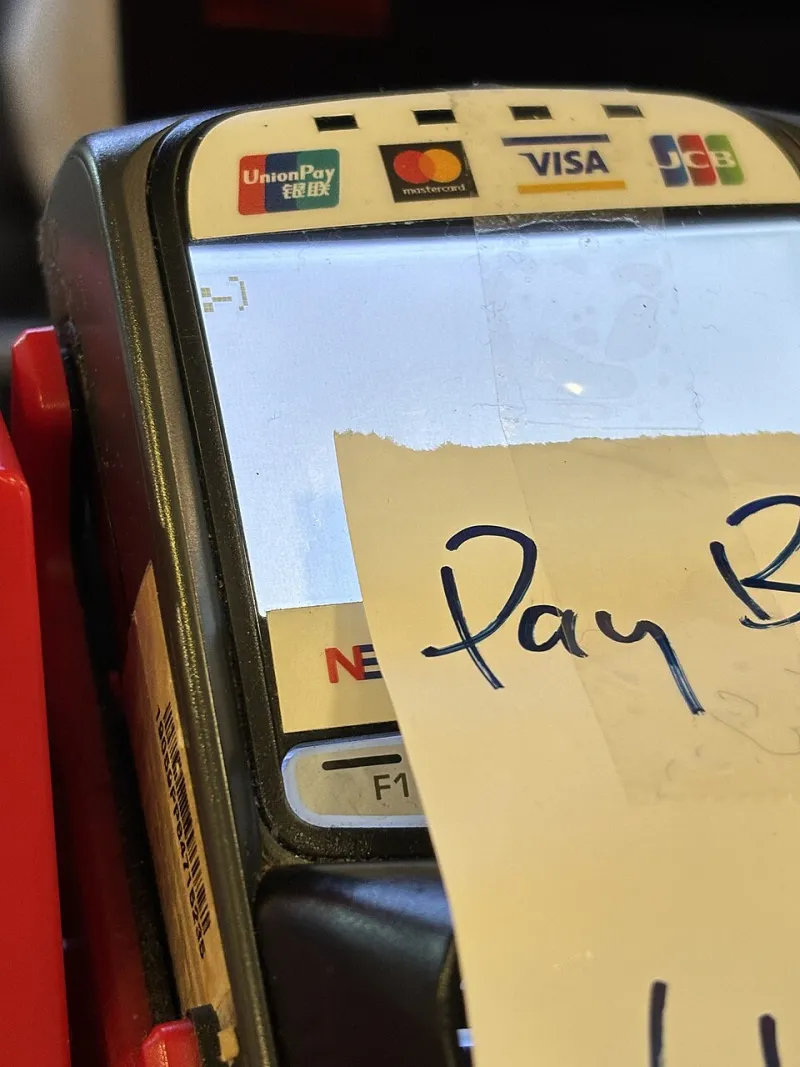
Photo: independent shop counter card payment terminal Bristol UK, via lh4.googleusercontent.com
Walk into a bakery on Gloucester Road, a hardware shop off North Street in Bedminster, or a stall in St Nicholas Market and you will often meet the same small notice: card payments welcome, minimum £5. For the customer it is a mild inconvenience. For the owner it is usually a decision taken in a hurry during a bad month and never revisited since. It deserves a proper look, because the numbers on both sides of the argument are smaller and stranger than most people assume.
What one card payment actually costs
A card fee has three parts. Interchange is capped in the UK at 0.2% for consumer debit cards and 0.3% for consumer credit cards under the Interchange Fee Regulation. On top of that sits the acquirer's margin, and then the fixed pence per transaction, which is where the damage is done on small tickets.
Take an illustrative independent-retailer tariff of 1.3% plus 7p per transaction. Here is what it does across a range of baskets, with a gross margin assumed at 50%:
| Sale value | Fee charged | Fee as % of sale | Fee as % of gross profit |
|---|---|---|---|
| £3.00 | 10.9p | 3.6% | 7.3% |
| £5.00 | 13.5p | 2.7% | 5.4% |
| £10.00 | 20.0p | 2.0% | 4.0% |
| £25.00 | 39.5p | 1.6% | 3.2% |
A £3 transaction is not catastrophic. It is, however, more than twice as expensive proportionately as a £25 one, and on a low-margin line such as confectionery or a single newspaper it can wipe out most of the profit. Ten such transactions a day is roughly £26 a month in fees; whether that is worth worrying about depends entirely on what happens to those customers next.
The cost that never appears on the statement
The lost sale is invisible, which is precisely why minimums survive. When a shopper is turned away at £4.60 they rarely argue. They put the item down, and they form a view of the shop that outlasts the transaction.
Three effects are worth weighing against the fee saving:
- The basket that would have grown. Some customers top up to clear a threshold. Many do not, and the shop has lost both the sale and the opportunity to sell anything else.
- The repeat visit. A £4.60 refusal may cost a £4.60 sale once, or a customer who spends £400 a year. You cannot measure this from your terminal report, but it is the larger number.
- Staff friction. Front-line colleagues absorb the awkwardness of enforcing the rule, and the quality of that enforcement varies by shift.
In a city where a very large share of payments are now made by contactless card or phone, a customer who has no cash on them is not an unusual case. They are the norm.
What the rules and your contract actually allow
Card scheme rules generally permit a merchant to set a minimum transaction value, provided it is clearly displayed before the customer commits to paying. Two caveats matter more than the rule itself. First, your own merchant agreement may be stricter than the scheme rules, particularly where an independent sales organisation has written its own terms, so check the contract you signed. Second, the ban on surcharging card payments, in force in the UK since January 2018 under the Payment Services Regulations 2017, still stands. Setting a minimum is not surcharging. Adding a 50p fee for paying by card is, and that is a regulatory problem rather than a commercial one.
It also pays to apply any minimum consistently. A rule that is enforced for one customer and waived for another invites complaints and puts staff in an impossible position.
Four questions that will give you an answer
Rather than copying a neighbouring shop, pull the data you already have.
- What proportion of your transactions fall below the proposed threshold? Most terminal providers will give you a transaction report filtered by value. If it is 3%, the fee saving is trivial and the answer is obvious. If it is 30%, you are running a low-ticket business and need a different solution.
- What is your gross margin on those small baskets? A 70% margin absorbs a 3% fee with ease. A 20% margin does not.
- What do customers actually do when refused? Watch for a fortnight. Do they add an item, pay cash, or leave? Observation beats theory here.
- Who is within walking distance? On a busy stretch of Easton or Clifton Village, the alternative is usually 100 metres away. On a residential parade in Fishponds, it often is not.
Where a minimum earns its keep, and where it does not
It can be defensible for a newsagent, a lunchtime sandwich counter, or a market stall where individual items cost £1.50 and margins are thin. It rarely makes sense for a service business taking deposits, where a single lost booking dwarfs a month of fees; for a boutique whose average sale is already north of £30; or for any shop trying to speed up the queue by going cashless.
Cheaper options worth trying first
Before the sign goes up, ask your provider two questions: is there a percentage-only tariff, and is there a plan with a lower fixed fee per transaction? A tariff of 1.75% with no pence component can halve the cost of a £3 sale. Other options include setting prices so that typical baskets naturally clear £5, or accepting every amount and recovering a penny or two across the price list.
If a minimum stays, make it modest, display it at the door as well as the till, brief staff on a single courteous script, and diarise a review for the same month next year. A rule that was right for your shop in a quiet January may be costing you money by the following autumn.